The path to a climate-neutral building stock in Europe requires both innovation and real-world implementation. The EU project Build Up Speed showcases how research-driven solutions can be applied through pilot renovation projects across Europe, moving from concept to reality.
Buildings in Europe account for nearly 40% of energy consumption and 36% of CO₂ emissions. Yet, renovation rates remain too low to meet 2030 and 2050 climate targets. Build Up Speed aims at accelerating deep renovation by testing industrialized prefabricated renovation systems in real demonstration projects across diverse climatic and regulatory environments.
Industrialized Renovation in Action
Industrialized renovation involves using prefabricated, standardized building components manufactured off-site in controlled environments and assembled quickly on-site. This approach contrasts with traditional renovation, which relies on manual, sequential construction processes. Industrialized methods focus on modular design, digital planning, quality-controlled production, and plug-and-play installation, making renovation faster, more predictable, and scalable across the building stock.
Within the project BuildUpSpeed, pilot project for industrialized renovation action have been realized in Austria, Italy, Spain and The Netherlands. Building types include large-scale residential building (in many cases social housing), office buildings, student housing as well as educational and public buildings.
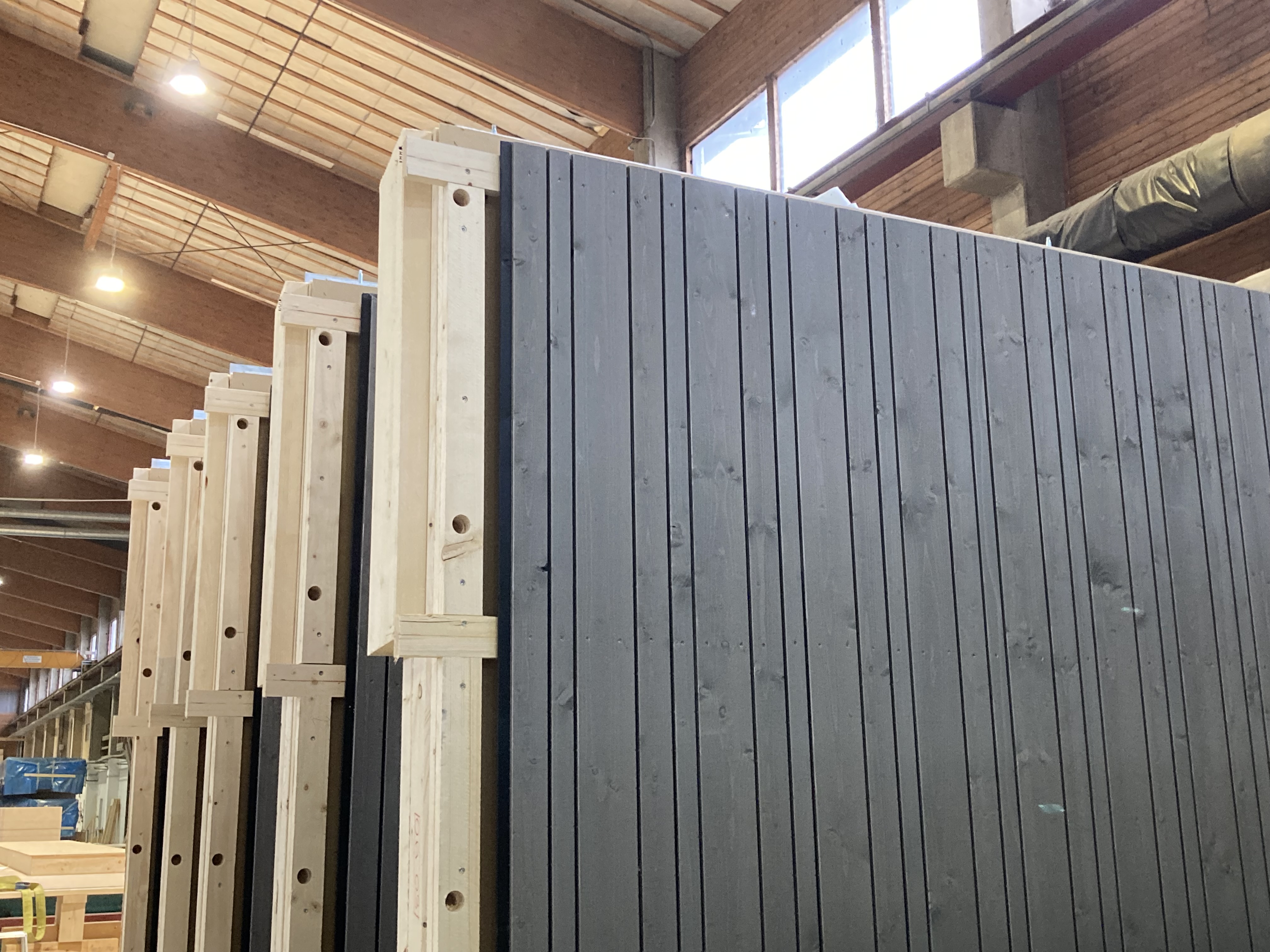
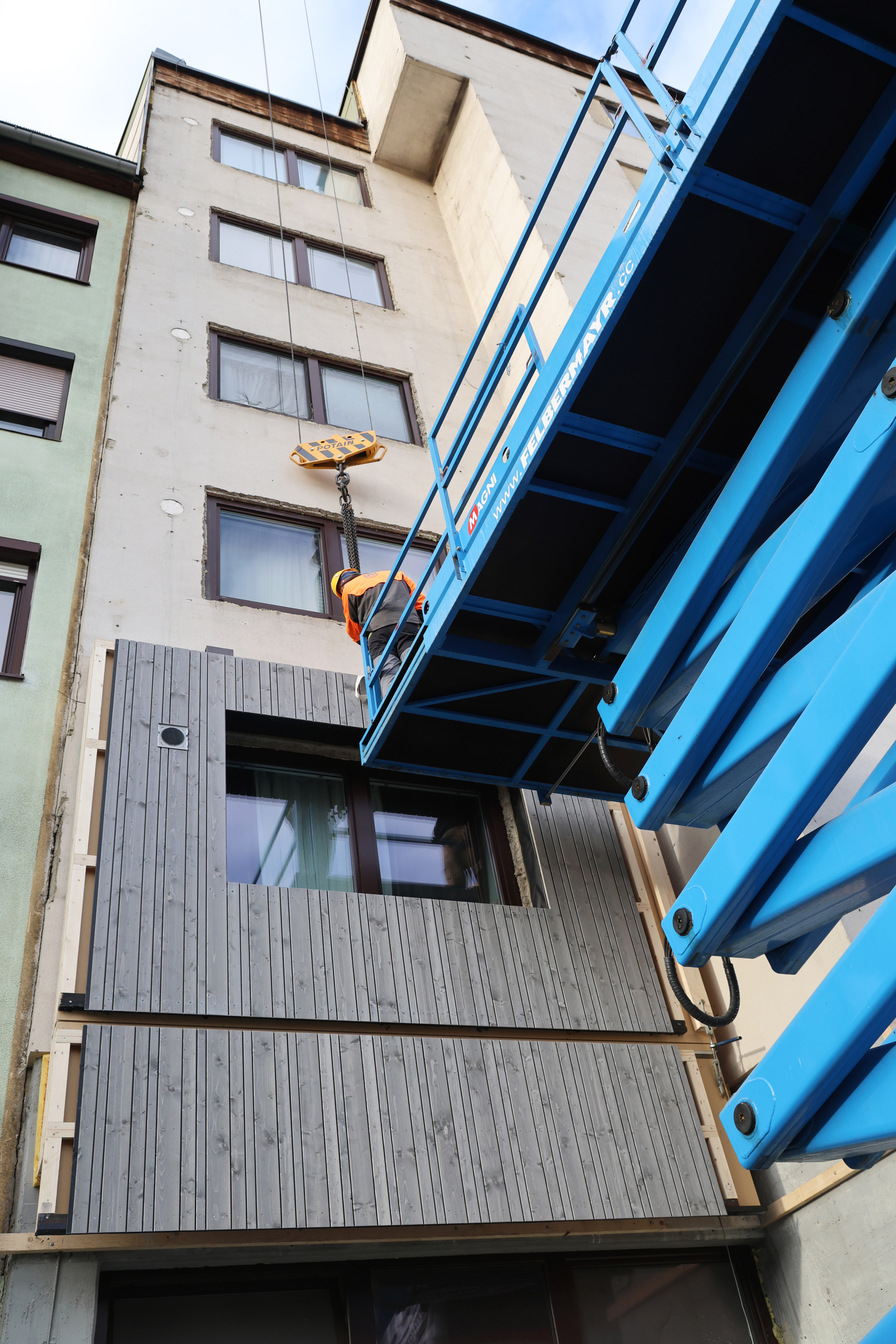
Industrialized renovation is done through façade modules that may integrate both envelope improvements and building services. These prefabricated modules combine high-performance insulation with embedded systems such as decentralized ventilation, heat recovery, integrated piping, and plug-and-play electrical connections. Shifting complex installation tasks to the factory reduces on-site renovation time and minimizes disruption for occupants—important for buildings that remain in use during renovation.
The façade modules can also incorporate renewable energy systems like photovoltaics and space heating solutions that heat the building mass from the outside. This holistic approach modernizes the building envelope, upgrades systems, and supports on-site energy generation in one coordinated step.
Example from Graz, Austria: Prefabricated modules in the factory and during installation
Emphasizing Material Reuse in Renovation
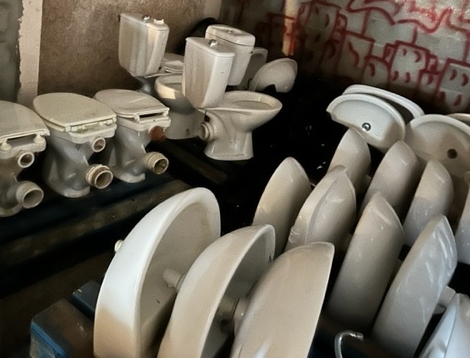
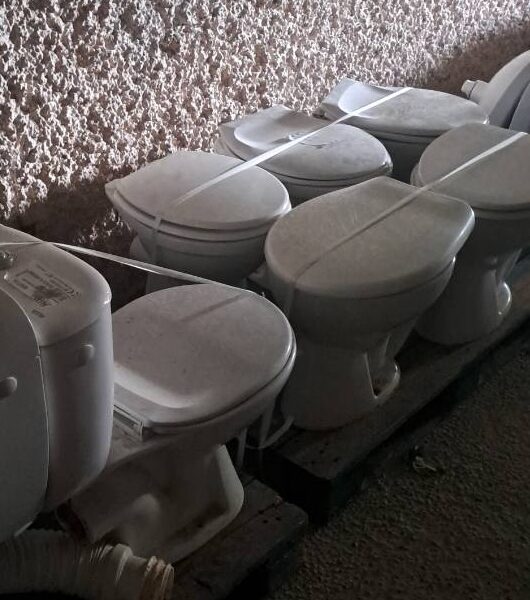
Material reuse is another aspect of renovation, reducing the environmental impact. The Build Up Speed project focuses on repurposing existing building components, helping to minimize waste, lower embodied carbon, and conserve resources. For example, building elements such as steel frames and bricks or sanitary equipment, windows and doors can be reused, while materials like concrete, wood, and insulation can be upcycled into new building elements. This emphasis on material reuse enhances sustainability, contributing to a circular economy and supporting long-term resource efficiency in the construction sector.
Example from Cenon, France: Sanitary equipment stored to be reused
Testing Across Climate Zones
The pilot projects span different European regions, each with distinct climate conditions and building typologies. Solutions tailored for Mediterranean climates, where cooling demand is higher, differ from those designed for Central or Northern Europe, where heating remains a priority. This geographic diversity ensures the solutions are adaptable and scalable.
A Blueprint for Scaling Up
Ultimately, Build Up Speed demonstrates that industrialized deep renovation is both replicable and scalable. The pilot projects provide blueprints for accelerating renovation efforts across Europe, turning research outcomes into practical, market-ready solutions that drive the European renovation wave forward.
Pictures from: © AEE INTEC © Klimafonds/Krobath and © Domofrance (both pictures)